
recent posts

Tags cloud
How to Make an EIC Technical Expert Trust Your Technology
How to Make an EIC Technical Expert Trust Your Technology
If I had to reduce preparation for an EIC Technical Expert Review to one rule, it would be this:
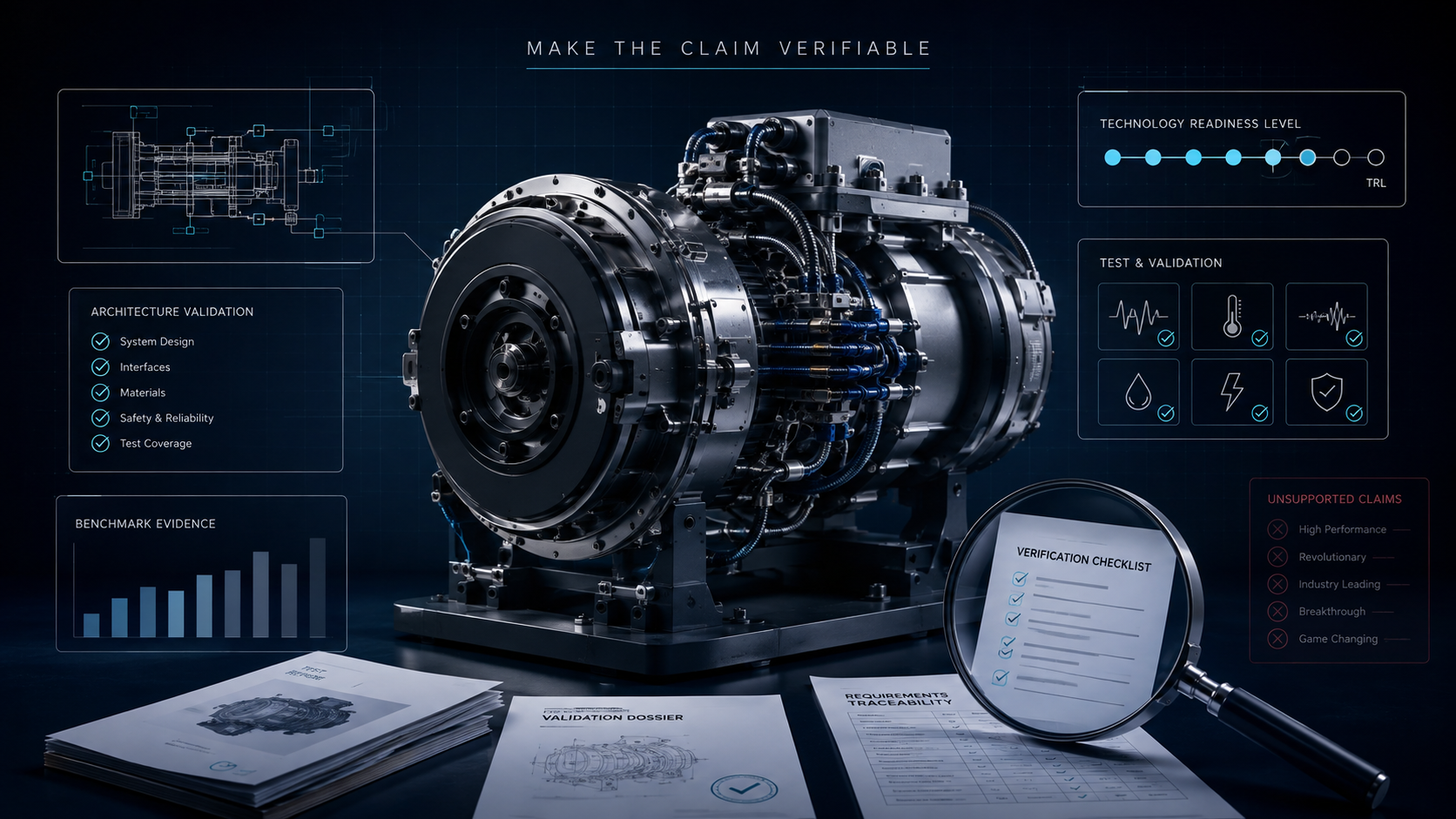
Do not try to sound technically impressive. Make your claims easy to verify.
Your market opportunity, commercial traction and business model still matter. But if the Technical Expert does not believe the mechanism, maturity or evidence behind the innovation, the rest of the case becomes much harder to defend.
Technical experts tend to attack the strongest claims first.
If you say the technology is “validated”, they will want to know where, under which conditions, against what baseline and with what result.
If you claim TRL 6, they may ask whether that maturity belongs to the actual breakthrough component or to an older, already mature part of the platform.
If you describe the system as robust, autonomous, scalable or real-time, expect questions about what those words mean operationally — and where their limits are.
This creates an important distinction:
❌ “Our technology has demonstrated excellent performance in multiple pilots.”
✅ “This component was tested in this environment, under these conditions, against this baseline, producing this result. These limitations remain, and the next validation step addresses them.”
The second answer is stronger because the expert does not have to trust the company’s interpretation. They can inspect the logic themselves.
The same applies to the mechanism.
A Technical Expert should quickly understand:
→ what the real technical bottleneck is
→ what your technology does differently
→ why that difference is technically non-trivial
→ what has already been demonstrated
→ what remains unproven
That last point is often underestimated.
Strong technical teams do not pretend that every uncertainty has disappeared. They know exactly where the evidence stops.
A clearly bounded limitation, connected to a credible validation plan, can create more confidence than an absolute claim that collapses under the first difficult question.
And this is why Technical Expert preparation should not be treated like another investor pitch.
It is closer to technical fact-checking.
Architecture, validation evidence, TRL, benchmarks, competitors, IP, failure conditions and limitations all need to tell the same story. One contradiction in a critical technical claim can make the expert start questioning unrelated parts of the case.
The goal is therefore not to overwhelm the reviewer with technical detail.
The goal is to make the important technical claims understandable, traceable and defensible under scrutiny.
If you are preparing for an EIC Technical Expert Review and want to identify which claims in your case are most vulnerable to challenge, send me a message here on LinkedIn or contact me at jlozano@siliconcp.com.
#EICAccelerator #EICFunding #TechnicalExpert #EICEvaluation #DeepTech #TRL #TechnicalValidation